What Happens If You Ignore a Wasp Nest?
I suppose many people think to themselves when they first spot a wasp nest, “I'll deal with that later.” Life gets busy, the nest is out of the way, and before long, it slips to the back of the mind. At first, this decision often seems justified. The wasps don't appear overly interested in you, and day-to-day routines carry on without interruption.
However, a wasp nest is not a static problem. It changes rapidly over the warmer months, and what feels like a harmless inconvenience in late spring can become a serious issue by the height of summer.
The Early Stages: Why Nothing Seems to Happen
If you ignore a wasp nest in late spring or early summer, it is quite possible that nothing much will happen for a while. At this stage, the nest is relatively small, and the wasps are focused on building and expanding their home. Their energy is directed inward rather than outward.
You can usually go about your business, and the wasps will do the same. They come and go, collecting materials and food, and unless you get very close to the nest entrance, they may barely acknowledge your presence. This period is often what gives people a false sense of security.
Because there are fewer wasps and less to defend, they tend to be calmer. Stings are uncommon unless the nest is disturbed directly. From the outside, it can appear that ignoring the nest is working just fine.
Mid to Late Summer: When the Real Problems Begin
The situation changes dramatically as summer progresses. By mid to late summer, a wasp nest can grow to a considerable size. Some nests reach up to four feet across, especially if conditions have been favourable and the nest has been left undisturbed.
With size comes numbers. A large nest can contain thousands of wasps, all working together and all invested in protecting their colony. At this point, the nest is no longer a quiet background presence. It becomes a living, active hub of activity.
Wasps are naturally more defensive later in the season. Food sources become scarcer, and their tolerance for perceived threats drops significantly. Simple actions such as mowing the lawn, opening a shed door, or even walking past the nest's flight path can trigger aggressive behaviour.
Aggression Increases With Nest Size
When nests are big, they are not only more difficult to treat, but they are also far more aggressive. The wasps have invested weeks or months into building their nest, and they will defend it fiercely. Vibrations, noise, or accidental contact can provoke a sudden swarm response.
This aggression is especially noticeable if the nest contains queen larvae. At this stage, the colony is protecting its future. Any perceived threat is taken seriously, and multiple wasps may attack simultaneously. This significantly raises the risk of stings, which can be dangerous, particularly for children, pets, or anyone with an allergy.
Why Large Wasp Nests Are Harder to Deal With
From a treatment point of view, ignoring a wasp nest until it grows large makes the problem much harder to resolve. Bigger nests require more insecticide to be effective. The sheer number of wasps means that a light or poorly applied treatment may not reach deep enough into the nest.
In some cases, larger nests need two treatments to fully finish the colony, especially since the withdrawal of Ficam D (the most reliable insecticide). While this is relatively rare, it does happen, particularly when nests are well hidden in wall cavities or loft spaces. Each additional treatment increases time, cost, and risk exposure.
There is also the matter of access. A small nest early in the season may be easy to reach safely. Once it has expanded, the nest structure can block access points, or the wasps themselves may make it dangerous to get close without professional equipment.
The Risk of Leaving a Nest Untreated
Beyond stings and treatment difficulty, an ignored wasp nest can affect how you use your space. Gardens, patios, garages, and lofts may become effectively off-limits. The constant presence of wasps can make outdoor areas unpleasant or even unusable during peak summer months.
Indoors, nests located in walls or roof spaces can lead to wasps finding their way inside the property. This often happens when the nest reaches capacity, and wasps search for new exit points. At that stage, the problem is no longer contained.
There is also the risk of structural damage. While wasps do not chew wood in the same way as termites, they do scrape wood fibres to build their nests. Over time, this can cause cosmetic damage to fences, and sheds.
Why Acting Early Is the Sensible Option
It is advisable to sort a wasp nest as soon as you discover it and before it has grown too big. Early treatment is generally quicker, safer, and more effective. There are fewer wasps to contend with, less insecticide is required, and the chances of needing repeat treatment are minimal.
Dealing with the nest early also reduces the risk of aggressive encounters later in the summer. It removes the problem before it has the opportunity to escalate and disrupt your home or garden.
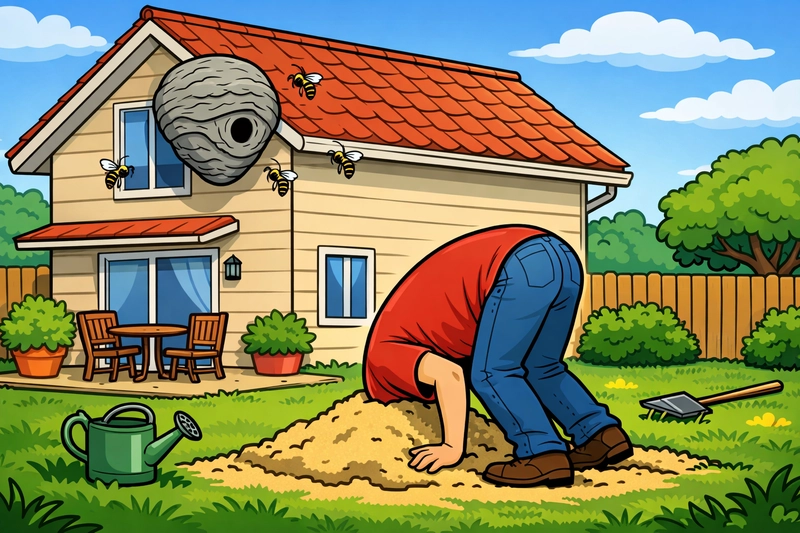
Ignoring a wasp nest might feel like the easy option at first, but as the weeks pass, the balance shifts. What starts as a minor issue can turn into a stressful and potentially dangerous situation, simply because it was left to grow unchecked.