Mason Bees: The Most Misidentified Insect in Spring (And Why People Think They're Wasps)
Every spring, many homeowners become convinced they have wasps nesting in their walls, brickwork, or around window frames. In a large number of cases, the insects they are seeing are actually mason bees. This is a very easy mistake to make because mason bees are similar in size and their flight patterns resemble those of wasps, and they often appear at the same time of year.
When insects suddenly start appearing around small holes in brickwork, people understandably worry about stings, nests inside walls, and the risk of an infestation. The confusion is made worse by the fact that early-season wasp activity is also low, so both insects can appear in small numbers at the same time of year.
What mason bees are really like
Mason bees are harmless, solitary bees that live for around six weeks and are usually seen in the spring. Unlike wasps, they are not aggressive and have little interest in people, pets, or food. Their focus is almost entirely on egg-laying and pollen gathering.
Normally, mason bee numbers are low. You might only see one or two at any given time, even if several nesting holes are in use. This low level of activity often mirrors what people expect from wasps in early spring, which is why the two insects are so frequently confused.
In spring, wasp numbers are also low. At this stage of the season, it is often just the queen, and sometimes one or two early workers. This means sightings of wasps can be sporadic, which makes it harder to judge whether the insects you are seeing are bees or wasps.
How to tell the difference by appearance
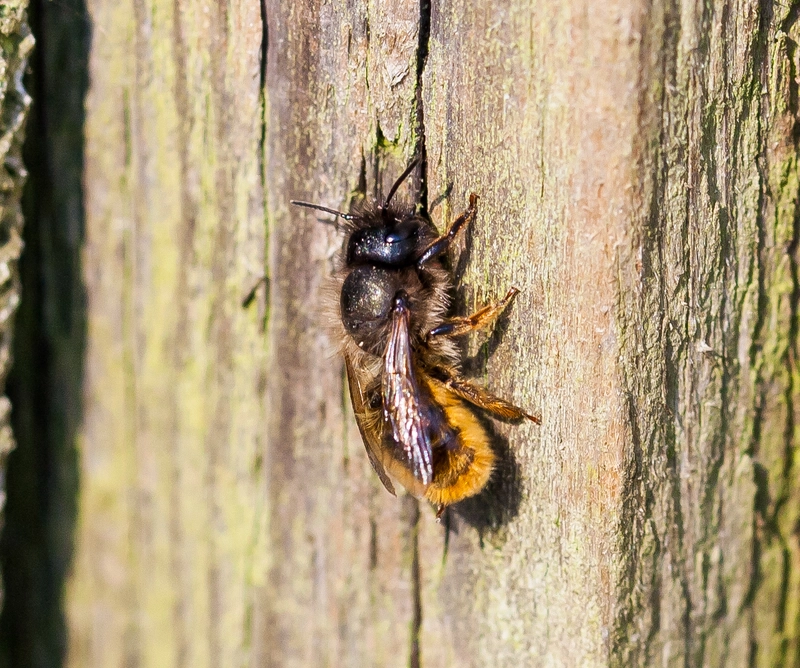
On closer inspection, mason bees have a slightly fluffy appearance. This fluff is not as pronounced as on bumble bees, but it is enough to give them a softer, less shiny look. Their bodies often appear slightly rounded rather than sharply defined.
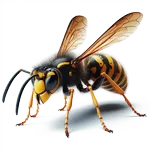
Wasps, on the other hand, have a smooth, bald appearance. Their bodies look sleek and shiny, with clearly defined yellow and black stripes. The difference is subtle when an insect flies quickly past a window, but when it pauses near a wall or hole, the contrast becomes much easier to spot.
Another visual clue is that mason bees can sometimes look as though they are lightly dusted. This is pollen clinging to their body hairs as they move between flowers and nesting sites. Wasps do not carry pollen and will never have this dusty appearance.
Where mason bees choose to nest
Mason bees like to lay their eggs in small holes in brickwork, mortar gaps, plastic weep vents and around window frames. They do not chew their way into walls or create new cavities. Instead, they take advantage of gaps and tiny openings in buildings.
Once they find a suitable hole, they begin a methodical process of egg laying. The bee packs mud into the hole and adds pollen. An egg is laid, then the hole is sealed with more packed mud. This process is repeated again and again: pollen, egg, mud, until the hole is full. Finally, the entrance is capped with mud to seal it from the outside.
This behaviour can look suspicious to homeowners, especially when they see insects repeatedly visiting the same small hole in brickwork. The presence of mud around the entrance often raises concerns about structural damage, but mason bees are not causing any damage to the property. They are simply using existing gaps.
How wasp behaviour looks different
Wasps use holes very differently. If wasps are nesting in a wall cavity, they will be constantly flying in and out of a larger opening (usually). The movement is purposeful and frequent, especially once workers become active.
If it is just the queen wasp early in the season, you will only ever see one insect. The queen will arrive, disappear inside the hole for around ten minutes, then exit and fly off for another ten minutes before returning. This pattern can repeat throughout the day.
This regular in-and-out movement is a strong indicator of wasp activity. Mason bees do not behave this way and do not operate from a central nest in the same manner.
The distinctive movement of mason bees at nest holes
Mason bees often appear uncertain when approaching their nesting holes. You may see one or two hovering around the same small gap in the wall. They will bob up and down near the entrance, as though checking whether they are at the correct hole.
Once satisfied, they will go inside. Sometimes they remain inside for quite a long time while packing mud or arranging pollen. Other times, they pop in and out quite quickly. This irregular pattern is very different from the structured movement of wasps returning to a developing nest.
This hovering and bobbing behaviour is one of the easiest ways to tell that the insect is a mason bee rather than a wasp, especially when combined with the presence of mud around the hole.
Colour is the quickest identification method
The easiest way to identify the difference between mason bees and wasps is by colour and texture. Mason bees are usually slightly golden in colour. In a certain light, they can appear warm-toned rather than bright yellow.
Because they collect pollen, mason bees often look dusty. This dusty coating is a clear giveaway that the insect is a bee and not a wasp.
Wasps have bold, defined yellow and black stripes and a glossy finish. Their colours appear sharper and more contrasting, and they never carry pollen on their bodies.
Why this confusion matters for homeowners
Misidentifying mason bees as wasps often leads to unnecessary worry. Homeowners may fear stings, damage to walls, or a nest forming inside the structure of the property. In reality, mason bees are not aggressive, do not defend nests, and do not cause structural damage.
This confusion can also result in people attempting to block holes or apply treatments that are not needed. Blocking holes can trap mason bees inside, causing them stress and preventing them from completing their short life cycle. Given that mason bees are extremely beneficial pollinators, this is an unfortunate outcome of a simple identification error.