Fake Nests: Do They Really Deter Wasps in Your Garden?
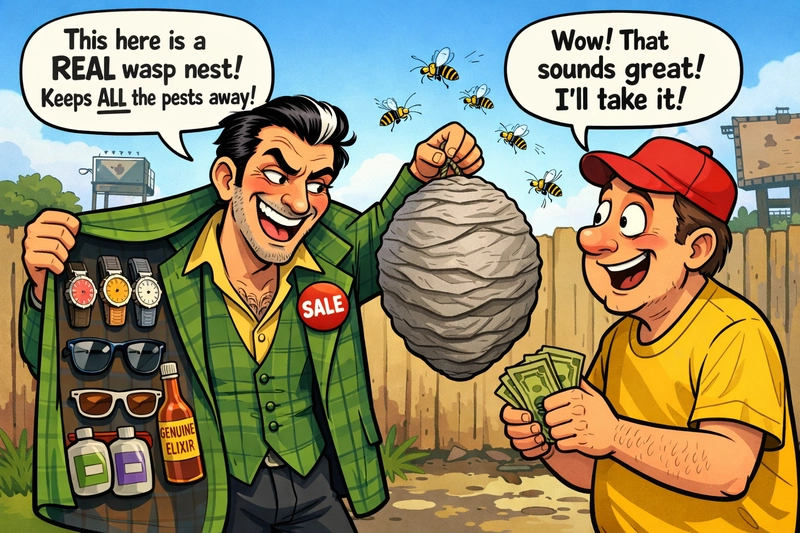
Most of us have spotted those fake wasp nests hanging around – the commercial ones sold as "Waspinators" or similar decoys, often grey and papery-looking, dangling from eaves, sheds, or trees. Customers frequently have them up when we arrive for a job, and many swear they keep wasps away. People tell us their gardens stay nest-free thanks to these gadgets. We sometimes joke, "If they work so well, why are we here removing nests?" But the reality tells a different story.
Why People Believe They Work
The idea makes sense on paper. Wasps appear territorial, so a fake nest should signal the spot is taken, making scouting queens look elsewhere. Hang one early in spring, and it might trick a queen into skipping your shed or porch. Some folks report success, especially if they put one up before any real activity starts. Manufacturers claim field tests show wasps avoid the area, and positive reviews pile up online from satisfied users. In quiet seasons or low-pressure spots, it can seem like the decoy does the trick.
The Hard Evidence from Real Jobs
Despite the claims, fake nests are a con. We regularly attend homes with multiple active wasp nests, often just a couple of feet apart. One memorable call was to a small barn-style shed in Hampshire that had around a dozen live nests inside – some inches from each other. The owners had fake nests hanging outside and even one inside, yet real colonies thrived right next to them and throughout the structure. This isn't rare; we've seen clusters in bushes, in roof voids, and along fences where nests sit close without issue.
Wasps don't avoid areas with existing nests the way the theory suggests. Queens build where conditions suit – shelter, materials, food nearby – not based purely on visual competition. Multiple species coexist in tight spaces, and even the same species will nest near others if resources allow. If wasps truly steered clear of occupied zones, we wouldn't find these dense clusters so often.
What the Fake Nests Lack
A real nest gives off far more than shape. It has worker wasps defending it, chemical pheromones marking territory, sounds from activity, and ongoing construction. A plastic or fabric decoy has none of that. It lacks scent cues that queens use to detect rivals or suitable sites. Visual similarity alone doesn't fool most species, especially common wasps or hornets in the UK that build enclosed or hidden nests. They ignore the fake or treat it as neutral – or, worse, use it as a landmark.
Timing and Placement Issues
Even if hung early, the decoy often fails as the season progresses. Queens scout in spring, but once a colony starts, workers forage widely and don't relocate based on a distant fake. Wind, rain, and sun quickly fade or damage the decoy, making it less convincing. Poor placement – too hidden or too high – reduces any slim chance it had. And if a real nest already exists nearby (even unseen), the fake does nothing to stop growth or new ones.
Better Alternatives for Garden Protection
Save your money on gimmicks. Prevention works better through practical steps. Seal gaps in sheds, garages, and eaves before queens scout. Keep bins clean and covered to cut food attractants. Trim overhanging branches and clear clutter where nests hide. Monitor early: watch for single queens in April/May or small papery starts in corners. Catch them small, and removal stays simple and safe.
When nests appear despite efforts, DIY risks stings and incomplete jobs. Professional tools and methods handle them quickly, day or night, if needed. In Hampshire's mild climate, early action prevents colonies from reaching peak size by summer.