Can Wasps Chew Through Walls?
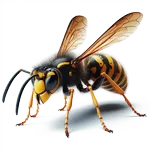
Without being too dramatic, wasps can chew through certain types of walls. They are not capable of damaging solid brick, concrete, or blockwork, but they can chew through softer materials such as plasterboard, insulation, and some lightweight wall coverings.
This is something we see every year, although it is thankfully not very common. When it does happen, it can be alarming for homeowners, especially if wasps suddenly appear inside a room with little warning.
Why wasps chew through plasterboard
Wasps do not chew through walls to attack people inside the house. This behaviour is almost always linked to nest expansion.
When a nest is built inside a cavity wall, loft space, or ceiling void, it will grow rapidly during the summer months. Once the nest fills the space available to it, the wasps begin searching for ways to create more room. Plasterboard is relatively soft compared to masonry, making it an easier option for them to break through.
The chewing is done using their powerful mandibles, which they normally use to process wood pulp for nest construction. Over time, repeated chewing can weaken the plasterboard enough for them to break through into the room.
What happens when they break through
Once the plasterboard is breached, a new problem starts. Light from inside the room shines into the cavity where the nest is located. Wasps are naturally attracted to light, so instead of exiting the nest outside as normal, they begin flying towards the light source.
This is when homeowners suddenly notice wasps appearing indoors, often in large numbers. The nest itself may still be hidden, but the room effectively becomes a new exit point for the colony.
At this stage, the nest can start emptying directly into the living space, which can be frightening and potentially dangerous, especially for children, pets, or anyone with a sting allergy.
Early warning signs behind the wall
One of the most common early signs of a nest growing behind plasterboard is a clicking or tapping noise coming from inside the wall or ceiling.
Many customers initially think this sound is caused by a water leak, as it can resemble dripping water or light knocking.
If you hear this type of noise, do not be tempted to poke the wall with your fingers, tools, or any other implement. Plasterboard weakened by moisture and chewing can fail easily, potentially releasing wasps directly into the room.
What to do if you hear noises in the wall
The safest first step is to go outside and observe the external area where the noise seems to be coming from. Look for wasps entering and exiting small gaps in brickwork, soffits, vents, or rooflines.
Visible activity outside, combined with internal clicking noises, is a strong indicator of a nest inside the structure of the building.
Avoid blocking any holes or cracks at this stage. Blocking entry points without treatment can trap wasps inside and force them to find another way out, which is often into the house.
Water, heat, and wall staining
Wasps bring large amounts of water back to the nest, particularly during hot summers. This water is used to regulate the nest's temperature and prevent overheating.
When a nest is built directly against plasterboard, moisture can transfer into the wall or ceiling. This can cause visible stains to appear, often brownish or damp-looking patches that slowly spread.
If you notice staining, it is important not to press, poke, or push the affected area. The plasterboard will often be soft and fragile and may break through with very little pressure.
A temporary safety measure if staining appears
If a stain suddenly appears and you suspect a wasp nest behind it, there is a simple temporary step you can take to reduce the risk of wasps breaking through into the room.
Find a piece of cardboard that is larger than the stain. Place the cardboard flat over the affected area, ensuring the edges overlap onto solid, undamaged plasterboard. Secure it in place using wide packing tape or a similar strong tape.
This does not fix the problem, but it can help contain the area and reduce the chance of an unexpected breakthrough while professional treatment is arranged.
How these nests are usually treated
In situations where a nest is touching or has weakened plasterboard, treatment often needs to be approached carefully. In many cases, the nest is treated both from inside the property and from outside to ensure quick, full control of the colony.
Access points are assessed to avoid unnecessary damage to walls or ceilings, and the goal is always to neutralise the nest before any further structural issues occur.
If you suspect wasps are chewing through plasterboard or notice any of the warning signs described above, professional help should be sought as soon as possible. These situations are uncommon, but when they occur, prompt action makes all the difference.