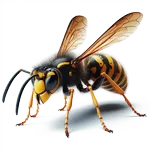

Are wasps really more aggressive in late summer?
Many people feel that wasps become noticeably more aggressive as summer draws to a close. Encounters seem more frequent, patience appears thinner, and getting stung feels more likely around pub gardens, picnics, and outdoor events. A popular explanation is that wasps are getting drunk on fermenting fruit or spilt alcohol. While this idea is widespread and entertaining, it does not reflect what is actually happening inside a wasp colony during late summer.
The real reason behind this shift in behaviour is far more interesting and rooted in survival, nutrition, and the future of the species.
The Myth of Drunk Wasps
It is often said that wasps become aggressive because they are intoxicated by alcohol from beer, cider, or overripe fruit. This belief has become part of late-summer folklore, especially in outdoor social settings.
In reality, wasps do not get drunk in the way humans do. While they may consume sugary liquids that are fermenting, their behaviour is not caused by alcohol intoxication. Instead, what looks like drunkenness is actually the result of nutritional stress and competition.
Late summer is a time when wasps are struggling to find enough high-quality sugar to fuel their energy needs. This shortage directly affects how they behave around others.
How Wasps Feed Earlier in the Summer
During the early and middle parts of summer, wasp colonies operate with remarkable efficiency. Adult worker wasps spend much of their time hunting other insects such as caterpillars, flies, and aphids. These insects are not eaten directly by the adults.
Instead, the captured prey is taken back to the nest and fed to the larvae. As the larvae digest this protein-rich food, they produce a sugary liquid that the adult wasps consume. This exchange benefits both sides: the larvae receive constant nourishment, and the adults receive a steady supply of energy.
This liquid is an exceptionally high-quality sugar source, derived in part from chitin found in insect shells. It provides adult wasps with everything they need to remain active, focused, and relatively calm as they carry out their daily tasks.
A Balanced System Inside the Nest
As long as there are plenty of larvae in the nest, adult wasps have little reason to seek out food elsewhere. Their nutritional needs are met internally, which means fewer interactions with humans and less competition with other wasps.
This is why wasps, earlier in the summer, often appear less interested in picnics, drinks, and sweet foods. The colony is balanced, and the adults are well-fed.
What Changes in Late Summer
As summer progresses, the structure and priorities of the wasp colony begin to change. The number of larvae in the nest gradually decreases, and in some cases, there may be few or none left producing the sugary liquid that adult wasps rely on.
When this internal food source disappears, adult wasps are forced to search elsewhere for energy. This is when human environments suddenly become very attractive.
Outdoor eating areas, bins, fruit trees, and pub gardens offer easy access to sugary substances. Unfortunately for the wasps, these foods are much lower in quality than what they previously received from the larvae.
Low-Quality Food and Its Effects
The sugars found in spilt drinks, processed foods, and fruit are harder for wasps to process efficiently. While these foods provide quick energy, they do not offer the same stability or nutritional balance.
As a result, adult wasps can appear disoriented, sluggish, or erratic. Their movements may look clumsy, which is often mistaken for drunkenness. In reality, they are running on poor-quality fuel and expending more effort to stay active.
This scarcity also increases competition. Wasps become far less tolerant of rivals and much more persistent around food sources. Aggressive encounters between wasps become more common, and humans often get caught in the middle.
Why Aggression Peaks Around People
Late summer environments bring wasps into close contact with humans more frequently. When multiple wasps compete for the same limited food source, stress levels rise.
Wasps communicate using chemical signals, and agitation spreads quickly within a group. Sudden movements, attempts to swat them away, or accidental contact can escalate the situation rapidly.
From the wasp’s perspective, defending a food source becomes essential for survival. This makes them appear bold, stubborn, and aggressive, especially compared to their calmer early-summer behaviour.
The Role of New Queens in Late Summer
By late summer and early autumn, usually around September, the colony enters one of its most critical phases. The final brood of larvae is being raised, and these are not ordinary workers.
This last generation includes the new queens. These future queens will leave the nest, mate, and then hibernate through the winter. When spring arrives, they will each start a new colony, continuing the species.
Why Nest Defence Becomes Extreme
Because these new queens represent the future of the colony’s genetic line, the adult workers become intensely protective of the nest. Any perceived threat is taken seriously.
At this stage, wasps are willing to take much greater risks to defend their home. Vibrations, noise, or activity near the nest can trigger aggressive responses. This behaviour is not random or malicious; it is driven by the instinct to protect the next generation.
The combination of food stress and heightened nest defence creates a perfect storm for aggressive encounters during late summer.
Understanding Peak Season Wasp Behaviour
What many people experience as a sudden change in wasp temperament is actually the result of several overlapping biological pressures. Reduced access to high-quality food, increased competition, and the need to protect future queens all contribute to their behaviour.
Wasps are not becoming aggressive without reason, nor are they intoxicated by alcohol. They are operating under survival conditions that demand persistence, competitiveness, and vigilance.
Recognising these factors helps explain why wasp activity feels more intense toward the end of summer and why encounters often escalate more quickly than earlier in the season.