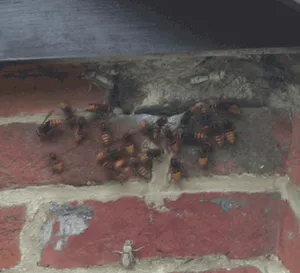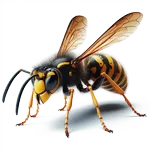
European Hornet life cycle
The European Hornet (Vespa Crabro)
The Hornet is significantly larger than the Common or German wasp. Despite popular belief, they are not inherently more aggressive. Aggression mainly occurs when they feel the need to protect their nests. Being cautious around Hornets is crucial due to their potent stings, but removing a Hornet nest can be done safely.
The life cycle of a Hornet nest begins in the spring when a queen establishes it.
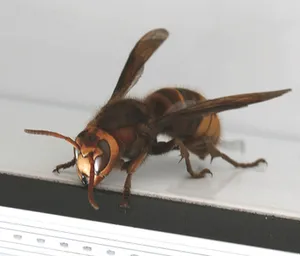
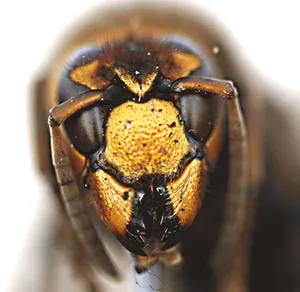
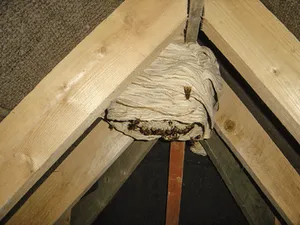
European Hornets are known to select various nesting locations but prefer dry and undisturbed areas. Loft spaces are particularly attractive to these insects, providing ample room to construct their nests.
During the nest-building process, the Hornets use chewed wood to create a strong, lightweight papier-mâché-like material. This unique substance gives the structure its durability and strength. Additionally, the nest is surprisingly waterproof, a testament to the Hornets' remarkable architectural skills.
Video of a queen Hornet starting to build a nest.
We are pleased to be able to bring you a video showing a queen Hornet starting her nest.
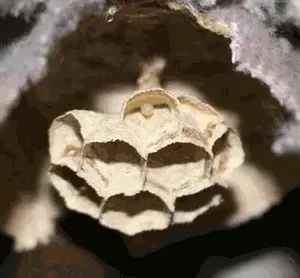
The nest is very early in development.
The hornet nest begins with around ten to twelve cells. It gradually expands over time, arranged in horizontal layers called combs.
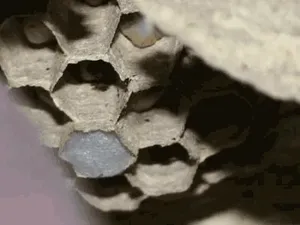
After an egg is laid, it transforms into a larvae within 5-8 days. The larvae undergo five developmental stages within the following two weeks. During this phase, the queen hornet feeds them with a protein-rich insect diet. As they mature, each larva spins a silk cap over its cell opening and becomes an adult hornet worker over the next two weeks.
In the attached photo, you can see one larva with its spun silk cap and, upon closer inspection, the other larvae in their cells.
Upon emerging as newly transformed adults, they take on responsibilities previously carried out by the queen, including building the nest, collecting water, foraging for food, and tending to new larvae. The only task they do not perform is laying eggs, which remains an exclusive task for the queen, as only she can do this.
As the number of hornets in the nest increases, the nest must expand to accommodate the growing colony. Additional combs are added to the nest at the same time.
In late summer, the queen produces reproductive females and males, i.e., new queens and drones. Male hornets do not participate in nest activities or maintenance and have different duties from female worker hornets.
In autumn, males and new queens leave the nest to mate. After mating, males die, and newly fertilized queens hibernate through winter, re-emerging in spring to start the process again by constructing their nests.
Hornets are distinct from other wasps in that they hunt during both day and night (Nocturnal). One noticeable sign of a hornet nest nearby is when you hear big insects hitting your windows at night, attracted to the indoor lights. Like moths, they may also assemble around outdoor lighting. Observing this behaviour suggests a nest is nearby, usually visible from your home.